
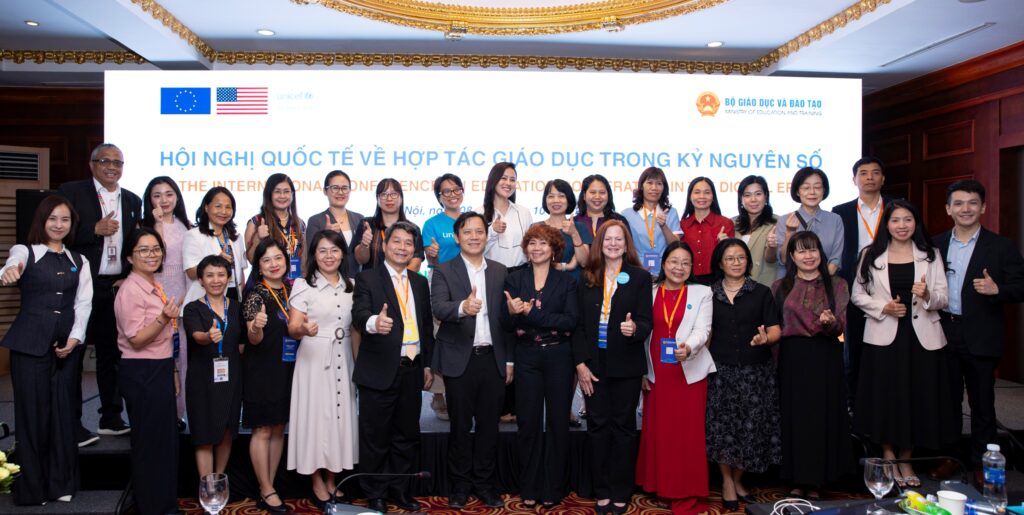
On the afternoon of October 8, 2026, the thematic panel “Global Alliance for Children Initiative,” operating under the theme “Building the Future Together,” was solemnly held at the Grand Plaza Hanoi. The high-level forum convened policymakers, development experts, and corporate representatives to discuss international partnerships in educational digital transformation.
Throughout the panel, the core challenge addressed was how to apply technology safely while maintaining a strict child-centered approach. Representing policymakers, Prof. Dr. Le Anh Vinh, Director General of the Vietnam Education Strategy and Policy Institute (VESPI), raised the critical question of identifying the essential conditions required to transition from pilot models to system-wide implementation while ensuring inclusivity for all learners. This strategic vision perfectly aligns with the Ministry of Education and Training’s directive on Promoting digital education cooperation for children’s development, which highly emphasizes the need for safe digital spaces. Supplementing this with practical local perspectives, Mr. Ha Duy Binh, Head of Digital Transformation Support and Advisory in Ho Chi Minh City (DXCenter), shared profound lessons on identifying the real bottlenecks during implementation, spanning across technology, data, governance, and human capacity.
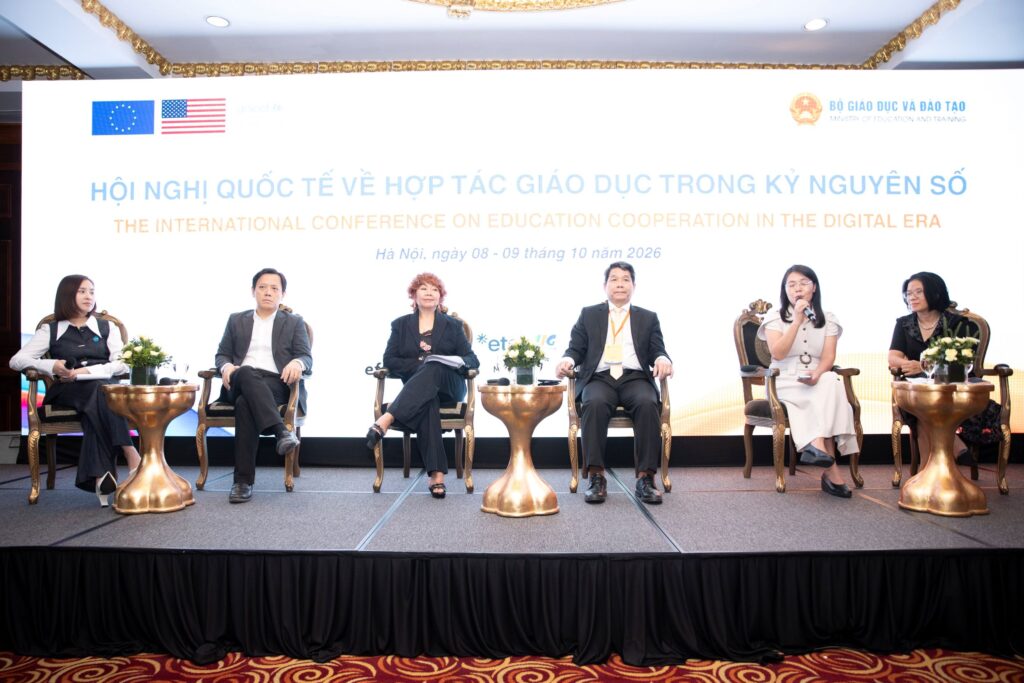
From left to right: The MC and delegates: Prof. Dr. Le Anh Vinh, Director General of Vietnam Education Strategy and Policy Institute (VESPI); Ms. Nguyen Thi Tu, Director of AEA; Mr. Ha Duy Binh, Head of Digital Transformation Support and Advisory in Ho Chi Minh City (DXCenter); Ms. Do Thi Thu Huong, Director of Government Affairs at Intel Vietnam and Ms. Dau Thuy Ha, Chairwoman of OMT
Echoing the human-centered perspective, Ms. Nguyen Thi Tu, Director of AEA, highlighted the absolute urgency of leaving no vulnerable demographic behind, specifically emphasizing girls, children with disabilities, and those in remote areas. From a future-skills perspective, Ms. Do Thi Thu Huong, Director of Government Affairs at Intel Vietnam, affirmed that enterprises share the responsibility with the education sector to equip children with the essential skills needed to adapt in an economy heavily driven by artificial intelligence. Contributing further to the overarching dialogue, Ms. Dau Thuy Ha, Chairwoman of OMT, provided professional insights on the concept of appropriate digital investments. She emphasized that the right investment means funding a comprehensive educational support ecosystem centered around children, where preschool teachers are the focal point, empowered with the capacity and tools to create highly interactive learning experiences.

The panel concluded with a strong consensus among all delegates on three overarching messages: digital transformation must be inclusive and inherently child-centered; it must guarantee a safe and healthy digital environment; and multi-stakeholder partnerships between the Government, development partners, civil society, and the private sector are the definitive keys to sustainable success. The academic insights and practical lessons drawn from this event provide a solid theoretical foundation for non-public early childhood education institutions to continuously enhance their governance capacity, innovate pedagogical methods, and steadily strive toward sustainable educational goals.
