
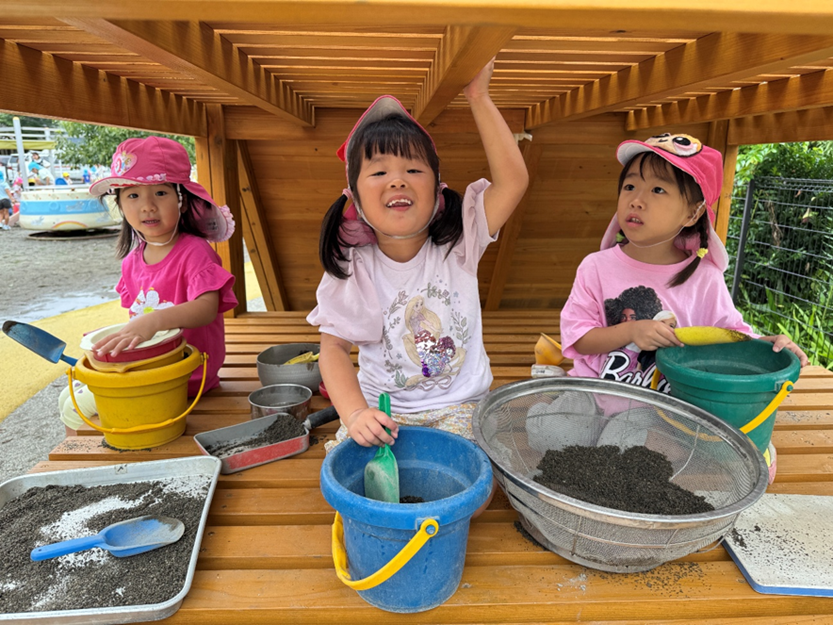
Facility Overview: Utsunomiya City is a core city with the largest population in the northern Kanto region, located nearly in the center of Tochigi Prefecture to the north of Tokyo. Operating as an authorized facility there since 1976, Tsuruta Nursery School has supported Japanese early childhood education and led the regional community.
Making full use of local characteristics, the school nurtures children’s “power to survive in the future” with deep love for children and an insatiable spirit of inquiry into early childhood education.
The ChildCareWeb Developmental Assessment System was introduced here 15 years ago.
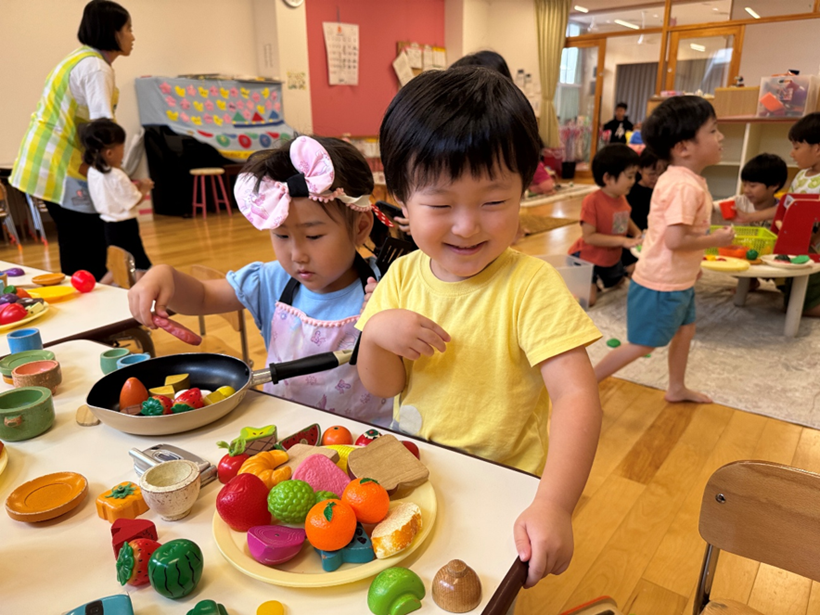
1. Purpose of Introduction
The primary purpose of introducing the ChildCareWeb Developmental Assessment was to “accurately capture each child’s development based on objective evidence, rather than relying solely on individual educators’ personal experience or preconceptions.”
Educators vary in their experience and knowledge, and fixed ideas such as “children at this age should be able to do this” can cause them to overlook a child’s actual condition. Therefore, relying on ChildCareWeb’s developmental assessment and nationwide child data, the school emphasizes confirming children’s current developmental status and providing care tailored to their age, month-age, and individual growth.
Furthermore, when explaining the rationale behind their care practices to parents, one of the goals of introduction was to move away from individual impressions and achieve “care that can be explained specifically with clear evidence.”
2. Usage, Procedures, and Practical Application
At Tsuruta Nursery School, developmental assessments are conducted approximately twice a month (mid-month and end of month) for infants, and about once a month for young children. Because infants (ages 0–2), especially 0-year-olds, develop rapidly over short periods, their status is checked at shorter intervals.
The basic workflow is a continuous cycle:
Observe the child → Check developmental items → Consult the “Mechanism” (developmental explanation) if questions arise → Understand the child’s current development → Share within the class and among staff → Reflect in care plans, environment, and support methods → Re-observe the child.
When doubts arise during checking, educators can review the mechanism on the spot. This allows them to immediately understand “why the child behaves this way” rather than leaving it unresolved.
In addition, if the assessment results reveal that “the class as a whole lacks experience in a certain area,” the school feeds this back into actual planning by prioritizing that experience in the following month’s care plan.
Rather than judging solely by chronological age, another key feature is adjusting the developmental age within ChildCareWeb to explore “how far the child has grown now” and “what experience should be prepared next.”
3. Utility
The utility most strongly felt by Tsuruta Nursery School is that “it creates a shared ‘measuring stick’ for observing children.”
Because ChildCareWeb’s assessment items cover a broad range of areas, including daily life and play, educators can notice aspects of development they usually overlook or subtle child behaviors they might have missed. The act of checking itself serves as an opportunity to reflect on their caregiving practice.
Moreover, rather than focusing merely on “can or cannot do,” it fosters a perspective of “thinking how to enable the child to succeed.” For instance, if a child struggles to stack square blocks but succeeds with a different shape, it prompts educators to change their approach, asking: “If this method is difficult, how about another way?”
Thus, ChildCareWeb is not a simple assessment tool; it functions as a “tool to elevate the quality of childcare practice through a cycle of Observation → Understanding → Hypothesis → Support → Re-observation.”
4. Educational Effects on Children
The major benefit for children is that “it makes it easier to prepare appropriate experiences and environments tailored to each child’s current development.”
For example, if a 3-year-old wants to use scissors after watching older children, instead of simply deciding “you’re only 3, so it’s too early,” educators can check the child’s current development and the developmental distance required to handle scissors, considering what preparatory experiences can be provided.
Effects are also seen in school readiness. For instance, tasks like “changing clothes while standing”-which are easily overlooked in nursery life but necessary in elementary school-are included in ChildCareWeb items. Checking these helps educators intentionally provide necessary experiences prior to primary school entry.
In short, by finely capturing development through ChildCareWeb, educators can connect “what the child can do now” to “what experience to provide next,” encompassing functional aspects as well as cognitive/non-cognitive growth, daily habits, play, and school readiness.
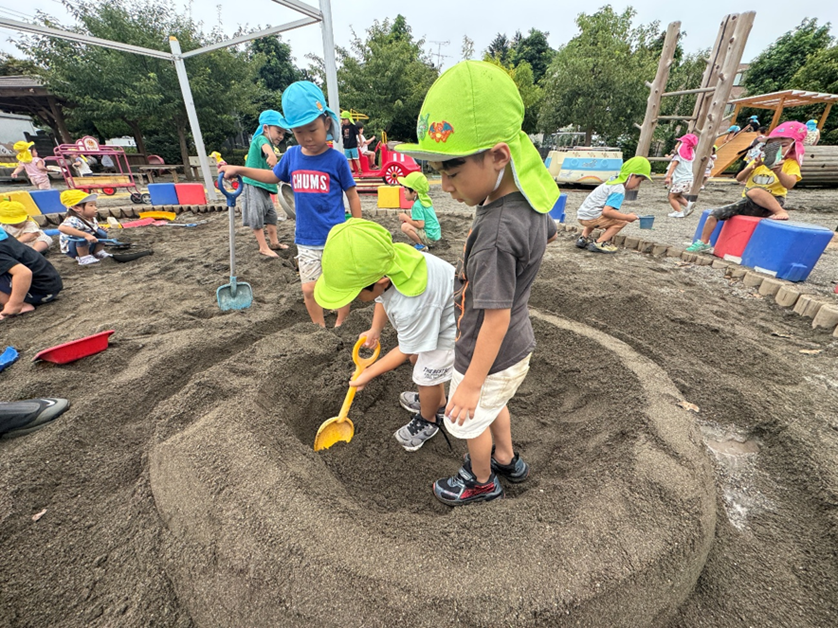
5. Educational Effects on Educators
For educators, it significantly improves “observational skills and developmental understanding,” “support skills,” “parent support capability,” and “confidence as professionals.”
For novice educators, cross-referencing assessment items and mechanisms with actual children transforms daily childcare into a learning opportunity. For veteran educators, it provides an opportunity to review fixed mindsets formed by experience and “re-learn.” At Tsuruta Nursery School, it functions as a “learning tool for novices and a re-learning tool for veterans.”
Furthermore, when advising parents, educators no longer rely on personal parenting experiences (“This is how it was for me”), but can explain things based on ChildCareWeb’s developmental assessments and mechanisms.
This ability to “explain with evidence” leads to greater confidence among educators. Confirming that their interactions are appropriate-or recognizing what is missing and realizing “what to do next”-serves as a major strength for childcare staff.
6. Effects on Building Early Intervention Systems for Children Needing Special Care
For children requiring special care, ChildCareWeb’s primary benefit is that “vague feelings of concern can be grasped and shared as concrete developmental conditions.”
For instance, even if a child is 5 years and 6 months old chronologically, their play development might be around 3 years while their daily living skills are around 2 years. Understanding these different developmental levels across domains helps organize specific support needs, moving away from abstract expressions like “they are delayed.”
When communicating support needs to parents, educators can start by acknowledging what the child “can” do based on statistical data and assessments rather than subjective views, and then explain the areas needing support specifically. This fosters parental understanding and agreement toward early intervention.
Furthermore, because current developmental stages and required support can be shared among all staff members, the entire facility-not just the primary teacher-can maintain consistent interactions.
Therefore, ChildCareWeb functions not just for early detection, but as a “tool supporting the entire early intervention system: Objective Understanding → Consensus Building with parents → Staff Sharing → Appropriate Support.”
7. Message from Tsuruta Nursery School to Everyone in Vietnam
An important point we wish to convey to everyone in Vietnam is that “developmental assessment is not merely for evaluating children or mechanically testing their abilities.”
The purpose of using ChildCareWeb is not just checking “what they can or cannot do” to assign the next task, but “understanding the child more deeply and staying close to their current development and feelings.”
While education in language, mathematics, and technical skills may be strongly emphasized worldwide including Vietnam, Japanese-style childcare emphasizes the importance of staying close to each child’s “now” to ensure a sense of safety and stability. The philosophy is to use developmental assessment to deepen understanding of the child, starting from a state where the child feels secure and happy.
In this sense, ChildCareWeb is positioned as a “tool that connects scientific and objective evidence with childcare that stays close to children and parents.”
Most importantly, rather than “fitting the child to the data,” the approach must be “using the data to understand the child in front of you more deeply.” Our key message from Tsuruta Nursery School’s practice is that through ChildCareWeb, educators gain a shared foundation to understand individual growth, provide reassurance to parents, and practice childcare that leads to children’s happiness.
Are you interested to know more about ChildCareWeb?
ChildCareWeb is likely the world’s only developmental assessment system based on real-time statistical data of infant developmental pass rates. We propose it as a fundamental tool to maximize the effectiveness of any educational approach, serving as a cornerstone for educators worldwide in their observation of children.
For details regarding our initiatives, products, and services, please contact our representative in Vietnam, HIMAWARI YOUCHIEN:
E-mail: info@himawari-kinder.com
Tel (within Vietnam): 02436463239 Tel (outside Vietnam): +8424-3646-3239
