
Facility Overview: Yokohama is a city south of Tokyo and was home to one of Japan’s first ports opened to foreign trade in 1859. Operating as an authorized facility there since 2002, Kuraki Nagata Nursery School has supported Japanese early childhood education.
Its expertise and quality of practice in early childhood education are highly acclaimed across Japan, attracting a constant stream of visitors nationwide. Leading childcare in Yokohama, the school nurtures children’s “capacity to find things interesting” through authentic experiences.
The ChildCareWeb Developmental Assessment System was introduced here 12 years ago.
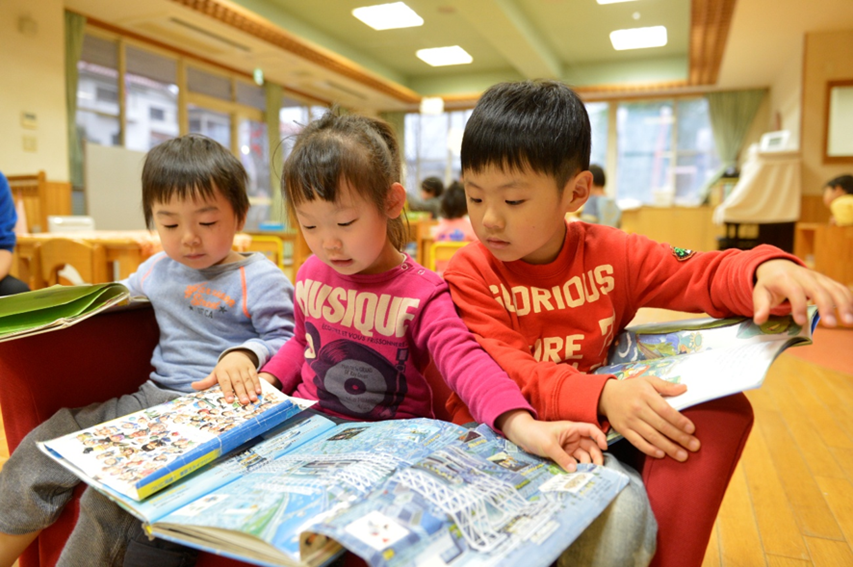
1. Purpose of Introduction
CCW Developmental Assessment is not intended to evaluate or judge children’s development by numerical scores or results, nor to fixate on “can or cannot.” It was introduced as a perspective and indicator to understand what a child is interested in right now, what they are trying to do, and what stage of development they are currently in during daily childcare.
In particular, relying solely on an educator’s personal experience and intuition can freeze their viewpoint or create unconscious biases in experienced staff. Using CCW Developmental Assessment as a shared indicator allows staff to objectively reflect on each child’s growth and consider the environment, support, and interaction methods best suited for them.
In short, CCW Developmental Assessment is viewed not as a “tool to evaluate children,” but as a “tool to deepen child understanding, enrich educators’ perspectives, and connect that understanding directly to actual childcare.”
2. Usage, Procedures, and Practical Application
The foundation starts with observing children during daily childcare. Based on these observations, staff perform developmental checks to capture current progress through the CCW Developmental Assessment. The results are discussed within the class and with the principal and head teachers to gain a multifaceted understanding before reflecting it in environmental setups and support strategies.
The frequency of assessment is roughly once a month for infants (0–2 years) and once every three months for children 3 years and older. However, children aged 3 and above who require developmental consideration are checked monthly. For infants, assessment results are reflected in individual monthly plans, linking directly to “current state,” “next goals,” and “environmental setup.”
By combining concrete episodes recorded in daily childcare logs with developmental stages identified through CCW assessments, written records and assessments complement each other.
To prevent individual bias, checks made by classroom teachers are reviewed by the principal and head teachers, engaging in dialogue like “Why was this item checked?” or “Is this interpretation accurate?”
In practice, educators observe subtle changes such as finger dexterity, posture, core stability, crawling methods, and utensil handling to determine “what materials or toys to prepare next” and “how much to let the child do independently versus how much to assist.” Rather than ending at record-keeping, the system is used in a cycle: Observation → Assessment → Staff Dialogue → Environmental/Support Adjustment → Re-observation.
3. Utility
The greatest utility experienced is that educators notice “growth” they previously overlooked.
Even experienced educators can develop fixed perspectives as they form their own way of looking at children. Using CCW Developmental Assessment as a shared indicator helps shift the focus away from “what they cannot do” toward “how far they have grown” and “in what situations they can display their strengths.”
Discussing assessments among multiple staff members reduces individual subjectivity and assumptions, helping form a shared understanding of the child’s image.
Additionally, it serves as a common foundation connecting daily logs, individual monthly plans, environmental design, and parent consultations. Its utility lies in acting as a “mediator connecting child understanding, staff dialogue, planning, environmental design, and parent support.”
4. Educational Effects on Children
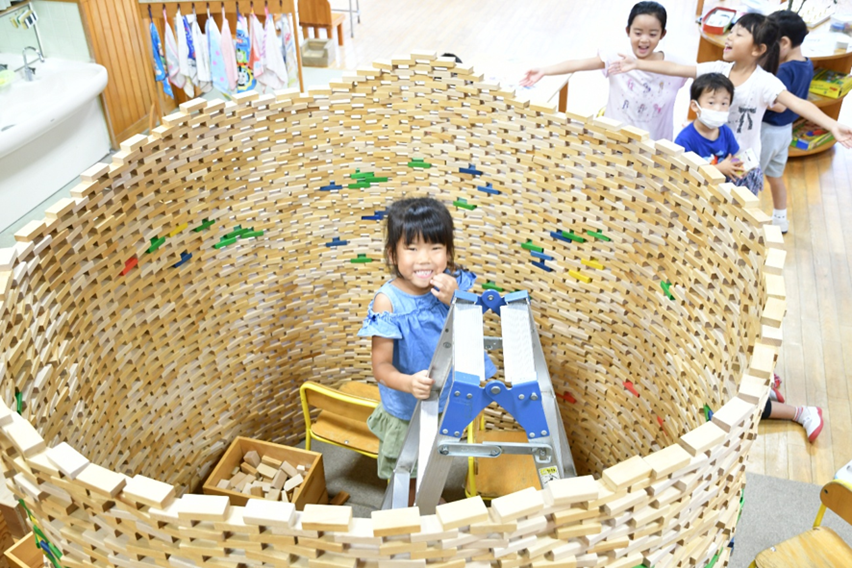
Conducting CCW Developmental Assessment does not directly increase a child’s abilities. Its educational effect is an “indirect effect” achieved when educators deepen their understanding of the child and adapt the environment and support accordingly.
For example, instead of simply viewing a child as “playing,” “sitting,” or “eating,” educators look at the underlying developmental mechanisms-such as finger movements, posture, core strength, hand placement, and utensil grip. This leads to concrete environmental adjustments, such as deciding “which toy is appropriate right now,” “what material to prepare next,” or “under what environment and with what kind of support can this child reach their full potential.”
For instance, passing ring-shaped materials over feet during play links to the movement of putting on socks or pants independently, while passing rings over the head connects to dressing or putting on aprons. Play and daily living skills are thus understood in connection with developmental progress.
Rather than “training” individual physical or cognitive functions in isolation, securing experiences and environments suited to the child’s current development and interests supports their physical, cognitive, daily living, and autonomous growth as a result.
Thus, instead of uniformly expecting “what must be achieved at a certain age,” it serves as a guide for “understanding each child’s current position and accumulating the experiences necessary for them.”
5. Educational Effects on Educators
The effect on educators is profound, particularly visible as a shift in “how they view children.”
Previously, observations tended to be simple (“they’ve grown” or “they can do it now”). Now, educators consider the underlying meaning and mechanisms of development, asking “what stage are they in now?” and “why did this movement become possible?”
In mealtime settings, for example, rather than just seeing the result that “a child can hold a bowl,” educators consider multiple factors together, such as “elbow stability has improved” or “posture and core stability made it easier to use both hands.” These insights lead to more concrete support and environmental setups.
Referencing ChildCareWeb’s “Mechanisms” (developmental explanations) and “Play Recipes” also provides an entry point for less experienced teachers to learn about development. Senior teachers can point to specific items or recipes to read, turning the system into an internal training and human resource development tool.
In parent support, educators avoid simplistic “can or cannot” expressions, gaining the ability to explain development professionally and specifically: “This area is growing well” or “They are currently at this stage.”
When encountering unknown behaviors, staff refrain from vague answers, taking time to check developmental mechanisms first. Thus, CCW Developmental Assessment functions as a comprehensive teacher-education tool that enhances developmental understanding, observation, support/environment design, staff dialogue, documentation, and parent consultation skills.
6. Nurturing Children Requiring Special Care: Early Detection and Support Systems
While CCW Developmental Assessment is not a diagnostic tool, it is effectively used to notice early signs in children requiring special care or attention.
The point is not labeling a child as “delayed” or “problematic,” but viewing things through the lens of “what in the current environment poses a difficulty for this child.”
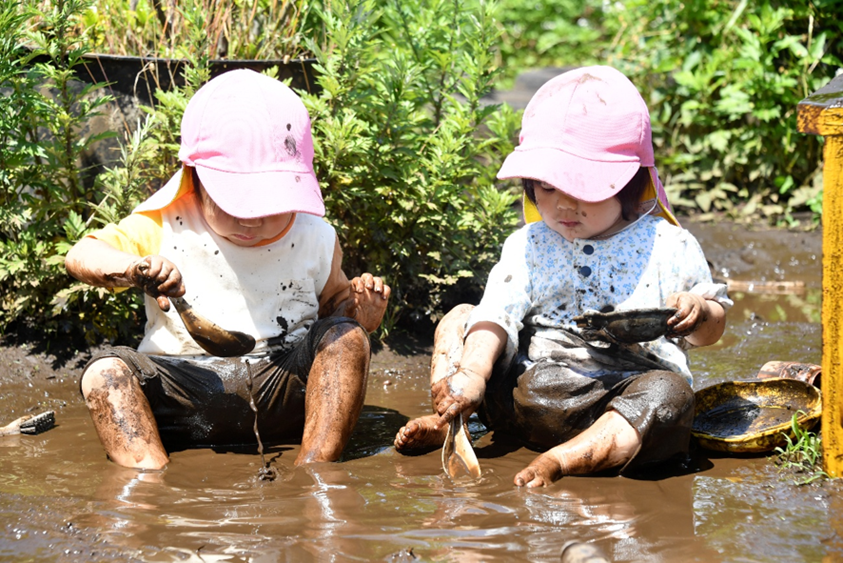
For children needing care, monthly continuous assessment allows staff to track progress as an ongoing trajectory rather than relying on temporary impressions. Based on these accumulated records, the principal, head teachers, and classroom teachers build a shared understanding and connect with parents or specialized support services as needed.
When communicating with parents, instead of unilaterally stating “this is a problem at school,” staff ask “How are things at home?” or “Are there any concerns?” using the assessment to align observations between home and school.
Therefore, CCW Developmental Assessment is meaningful not as an early detection screening tool, but as a “tool supporting early awareness → sharing → environmental adjustment → parent dialogue → connection to specialized support.”
7. Message from Kuraki Nagata Nursery School to Kindergartens in Vietnam
CCW Developmental Assessment is not meant to force children into fixed standards or evaluate them based on “what they must do at a certain age.” It should be used as material to understand what each child is interested in, what they are feeling, and what developmental stage they are in right now.
When cultures, living environments, or home languages differ, children’s experiences, ways of expression, and parents’ views on child-rearing naturally differ as well. Therefore, rather than looking only at assessment results, it is vital to “understand the child including their cultural and family background.”
At our nursery, we have children and parents with roots in Vietnam. When necessary, we share materials translated into Vietnamese to facilitate dialogue, asking “We see this growth at school; how are things at home?”
The assessment tool itself does not raise children; what matters is what educators notice from it, what they discuss with each other, and how they adjust the environment and interactions for the child’s benefit.
We hope you will use assessment not as something that ends with “keeping records,” but as a shared language to understand children more deeply and support their unique growth.
Are you interested to know more about ChildCareWeb?
ChildCareWeb is likely the world’s only developmental assessment system based on real-time statistical data of infant developmental pass rates. We propose it as a fundamental tool to maximize the effectiveness of any educational approach, serving as a cornerstone for educators worldwide in their observation of children.
For details regarding our initiatives, products, and services, please contact our representative in Vietnam, HIMAWARI YOUCHIEN:
E-mail: info@himawari-kinder.com
Tel (within Vietnam): 02436463239 Tel (outside Vietnam): +8424-3646-3239
